

Be The Songwriter: What Paul Simon Can Teach Us About Working With AI While Holding Fast to Our Humanity
Where I explore how Paul Simon's 1970 confession on the Dick Cavett Show reveals what separates AI work that comes alive from AI work that falls flat

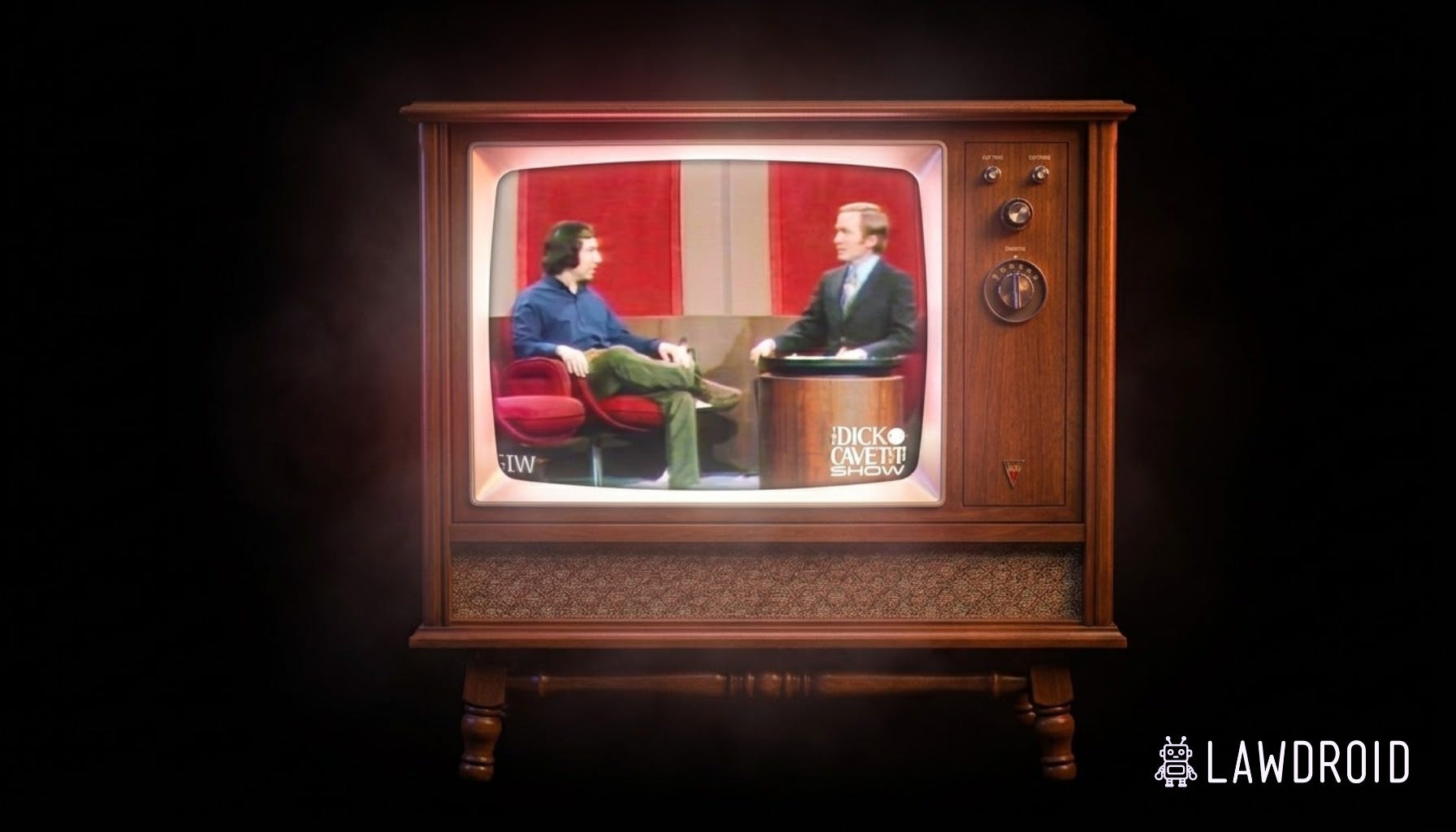
Paul Simon sat across from Dick Cavett in April 1970 and was asked an impossible question. How does a song come into being? There is a moment when “Bridge Over Troubled Water” does not exist, and then there is another moment when it does, or when it begins to. What happens in between?
Simon reached behind the couch, picked up his acoustic guitar, and demonstrated. He had an opening melody. Then a Bach chorale slipped in from somewhere in his mind. Then he was stuck. The reason he was feeling stuck, he told Cavett, was that “everywhere I went led me where I didn’t want to be.” So he kept listening to a gospel group called the Swan Silvertones, and one of their lines, “I’ll be a bridge over deep water if you trust in my name,” made its way into his thoughts and the song. He smiled and admitted to the audience: “I guess I stole it, actually.”
Then he said: “That’s how songs happen. They piece themselves together.”
I call this The Songwriter’s Method, and I believe it is the most accurate model we have for what serious work with AI actually looks like.
If this sounds interesting to you, read on...
This substack, LawDroid Manifesto, is here to keep you in the loop about the intersection of AI and the law. Please share this article with your friends and colleagues and remember to tell me what you think in the comments below.
A Confession About Stealing
What Simon was confessing on national television was that “Bridge Over Troubled Water” was not invented from nothing. It was stitched. The opening melody was his. The next phrase came from Bach, sitting in his subconscious from years of listening. The hook came from a gospel group he had been wearing out on his turntable. The integration was his. The fragments came from everywhere.
This is the part most people miss about creative mastery.
Originality has rarely meant invention from nothing. It has meant a particular ear for which fragments belong together. Eliot wrote that immature poets borrow and mature poets steal. Bach himself was one of the great recombiners in musical history. The myth of the solitary genius spinning new material out of pure inspiration is a Romantic-era story we have inherited and rarely questioned, and it does not match how the work has ever really gotten done.
Simon’s confession is revealing. The song was alive. People recognized themselves in it within the first chord. It has become a standard. And it was built from pieces that already existed in the world. Whatever it was that made the song into a song was not the rarity of the parts, but the ethereal, unique mix.
The Emotional Center
Here is where the conversation between Simon and Cavett turns, and here is the moment that matters most in relation to understanding AI.
Cavett asks Simon what makes him stuck. Simon answers, “Everywhere I went led me where I didn’t want to be.”
On the surface, Simon is describing a compositional problem. Every musical continuation he tried for the half-finished song felt wrong, led to a dead end. But the line means more than that. It is also a description of his life at that moment. He was a young man at the height of his fame, navigating the dissolution of his partnership with Garfunkel, uncertain where to go next as an artist or as a person. Everywhere he was led was everywhere he did not want to be.
That feeling was the songwriting.
The stuckness in the song was the stuckness he was living. And when the Swan Silvertones line came through, what got built around it answered both at once. A bridge appears, in the song and in the life, when someone offers to lay themselves down so you can cross over the trouble, to the other side. The musical fragments resonated because there was an emotional truth at the center pulling them together.
The Same Practice, with More Material
Now bring this back to the question of what serious work with AI actually looks like.
The fragments are everywhere now. AI has made the supply of available material almost infinite. Pieces of every discipline, every style, every register, every voice, every form of structured information, all of it is one prompt away. The Bach chorales of the world are in your pocket. The gospel singers and the scat soloists are in your pocket. So is every textbook, every research paper, every photograph, every line of code, every recipe, every recorded interview.
This is genuinely new. The abundance is real and it changes what is possible.
But, creative work had always been about taste, judgment, curation — the things you don’t choose. It has been about what belongs together, where they touch, what holds them in the same register. That is the songwriter’s work, and the songwriter’s work cannot be outsourced.
What the songwriter does that the AI cannot do is carry the weight of being inside it — to be shattered by betrayal or elevated by love. What it cannot do is be stuck in a life where everywhere you have been led is somewhere you did not want to be. It cannot live in your skin.
How to Be the Songwriter
If you want AI work that comes alive, the practice is closer to what musicians, storytellers, and philosophers have always done than to anything else. Start with what you are carrying inside you: your fears, your thoughts, your questions, your hopes.
Be wide in your search.
Let the Bach chorale and the gospel group and the overheard whispers all come into the room. Do not police the borders of where good material can come from. The legal scholar reaching for cognitive science or psychology, the physicist reaching for philosophy of mind, the engineer reaching for poetry, the parent reaching for evolutionary biology, all of this is the songwriter’s instinct. The fragments are everywhere if you are willing to let them in.
Then trust the integration.
Simon did not consciously decide to fuse Bach and gospel and his own opening line. He listened to the Swan Silvertones over and over because he loved them, and one day the line surfaced and slipped into the song. The integration is partly conscious, partly subconscious, and the subconscious work depends on having marinated in enough material that the connections can form on their own.
Let the AI extend your perception.
Let it surface ideas and connections you would not have found, make connections you would not have made, offer variations you would not have considered. This is real and valuable. The supply of material the AI can put in front of you is one of the genuinely useful capabilities of the technology. The songwriter’s instinct says yes to this. Take the Bach. Take the gospel. Take it all in. Welcome what arrives.
Hold the center yourself.
The AI cannot do this part for you, and trying to delegate it produces exactly the hollow output we have all learned to recognize. What are you actually carrying inside? What is the trouble the bridge is meant to cross?
This works in both directions. The paths the AI surfaces can redirect what you thought you were exploring. A connection the model makes between two of your ideas exposes the deeper question that was driving both. The center can be discovered and refined in the act of gathering. Simon did not start with bridges; he started with a feeling of being led nowhere good, and the bridge arrived as the answer, to find a way home.
Closing Thoughts
Paul Simon’s confession on Dick Cavett’s couch in April 1970 was not really about songwriting alone. It was about how human beings make anything meaningful. We create around what we are living. The work comes together when the center is real and falls apart when it is not.
AI has not changed this.
AI has changed the abundance of what we can pursue, the speed of iteration, the cost of experimentation, the reach of what is available. But the emotional center remains the human condition. It is what we possess that the machine cannot.
The test for whether anything you make with AI is authentic and alive comes down to one question: Did it spring from deep inside you?
Be the songwriter.
Tom Martin is CEO & Founder of LawDroid, Adjunct Professor at Suffolk University Law School, and Author of the forthcoming AI with Purpose: A Strategic Blueprint for Legal Transformation (Globe Law and Business). He is “The AI Law Professor” and writes his eponymous column for the Thomson Reuters Institute.
Love Bach’s fugues - visiting a theme over and over again from different perspectives, like people are doing now with AI. Each person coming up with their own combination of know-how and tooling and applications. We’re in the Cambrian Explosion of legal innovation.
And what happened after the Cambrian Explosion…?