

Three Countries, Three Weeks, One Truth: AI Has Arrived in Legal
Where I share my journey through London, New York, and Toronto and how it reveals where legal AI stands, and where it’s heading


In November, I had the rare privilege of attending three legal technology conferences across three countries in just over three weeks. Legal Innovators UK and New York organized by the consummate Richard Tromans of Artificial Lawyer and Timo Karakashev of Cosmonauts, and Future Lawyer Canada in Toronto by Cosmonauts.
The events offered a distinct window into how the legal profession is grappling with generative AI. What emerged wasn’t just a collection of insights; it was a portrait of a profession in transformation, viewed through the cultural lenses of three nations.
If this sounds interesting to you, read on…
This substack, LawDroid Manifesto, is here to keep you in the loop about the intersection of AI and the law. Please share this article with your friends and colleagues and remember to tell me what you think in the comments below.
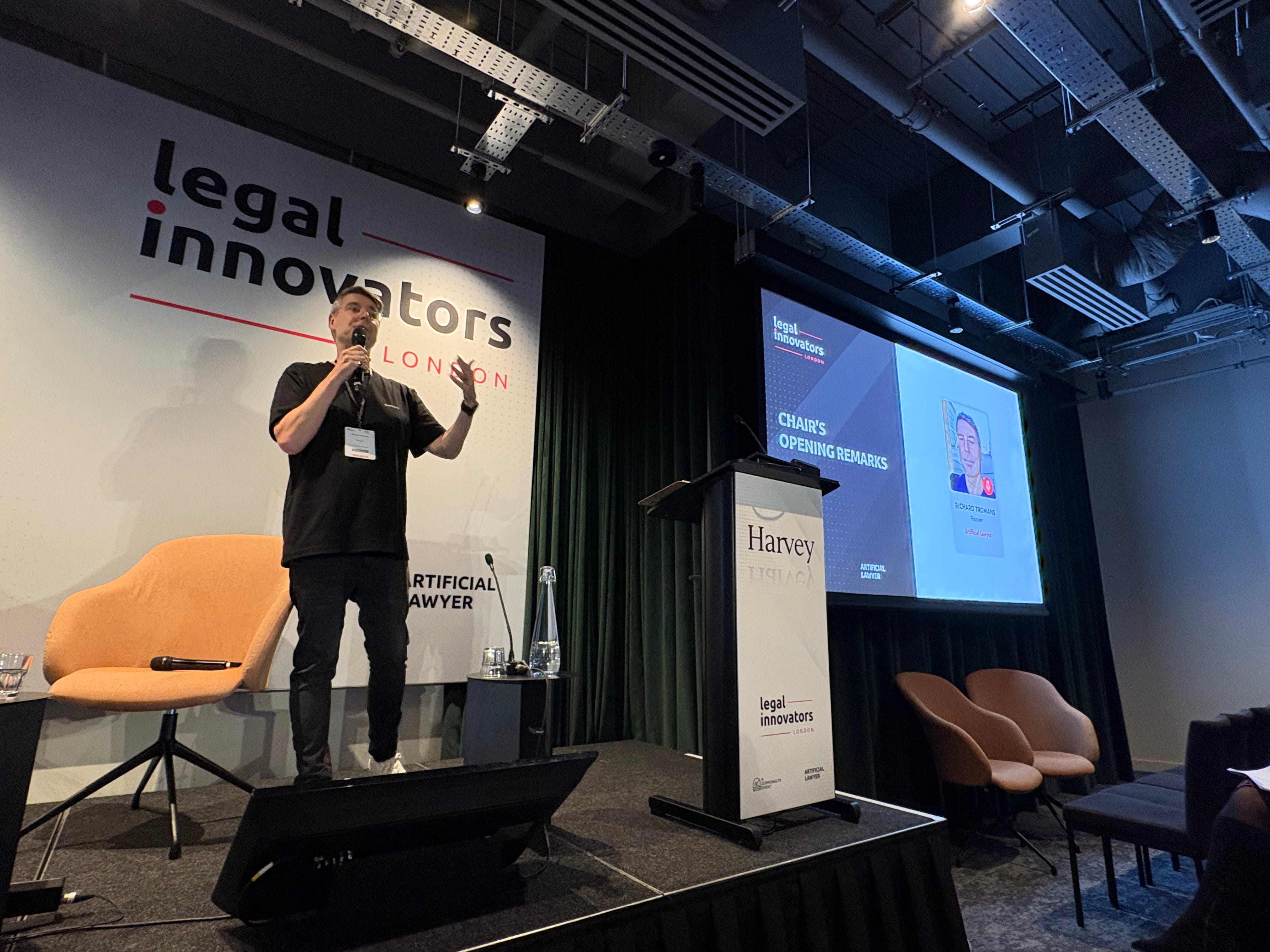
Legal Innovators UK: The Maturation of AI Thinking
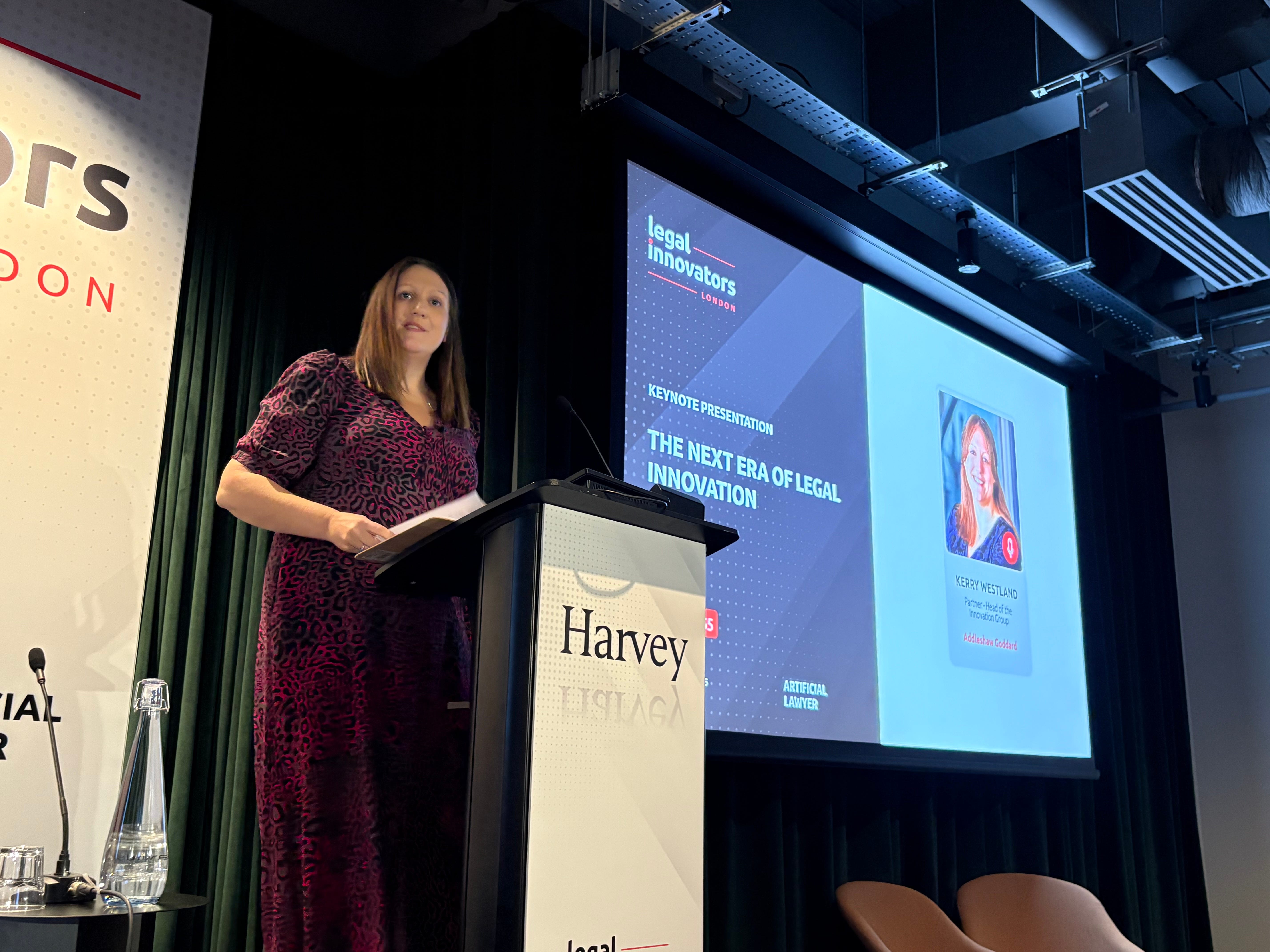
London set the tone with a level of sophistication that reflected the UK’s head start in legal innovation discourse. Kerry Westland’s opening keynote introduced the concept of “Legal 3.0,” the idea that innovation has become the operating system, not an add-on feature. Her message was refreshingly pragmatic: “Don’t chase shiny tools, fix the plumbing.”
The British contingent displayed a healthy skepticism married to genuine engagement. During the fireside chat with Sam Ruback and Laura Fessey of CMS, the emphasis was on making GenAI “a habit” rather than a headline. With 3,000 users and an enterprise Harvey deployment, CMS reported saving 1,100 hours per month, but the conversation wasn’t about the numbers. It was about depth of use, the difference between “sign up” and “adoption,” and the critical insight that “success metrics should move from perfection to progress.”
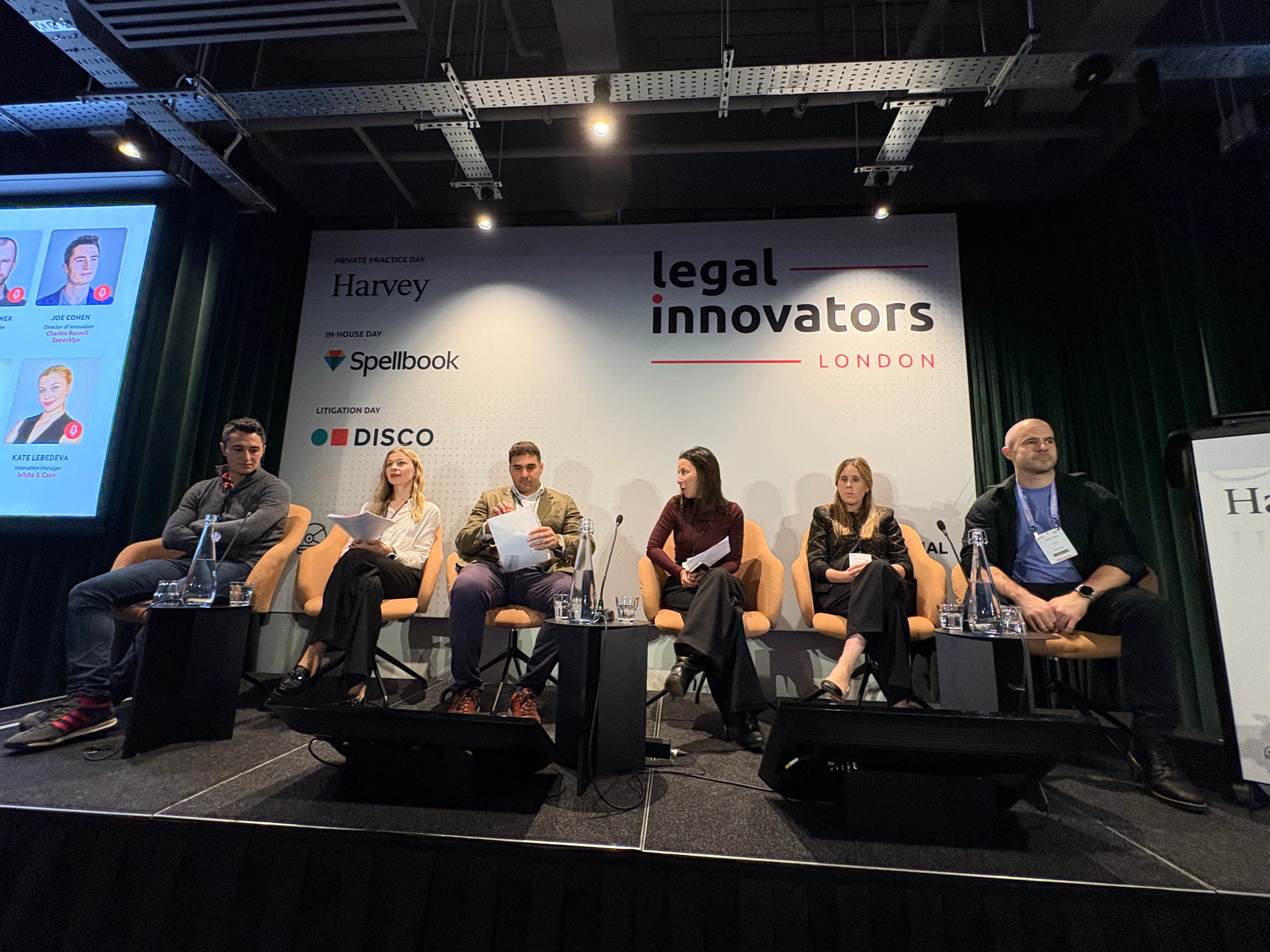
The “Market Maturity” panel featuring Yannic, Emma, Kate, Joe, and Ezequiel crystallized a key observation: the “headless chicken phase” of AI has cooled. Joe Cohen from his firm offered a refreshingly contrarian approach: don’t overthink use cases in advance. Use the tools for whatever you want, analyze what sticks, then polish those applications. His four-stage maturity model: from ad hoc usage to bots, then workflows, then supervised agents, and finally autonomous agents, provided a practical roadmap that resonated throughout the room.
Perhaps the most strategic insight came from Michael’s fireside chat on M&A in a GenAI world. His observation that GenAI isn’t just the same process made faster, but rather “brings something more to the process,” captures the qualitative shift underway. The ability to capitalize on captured data rather than letting it sit siloed represents a fundamental change in how legal knowledge compounds.
Ruth Musgrave of Freshfields reminded us that knowledge lawyers are becoming central to AI transformation, they understand both the substance and the systems, making them uniquely positioned to bridge the gap between technology and practice.
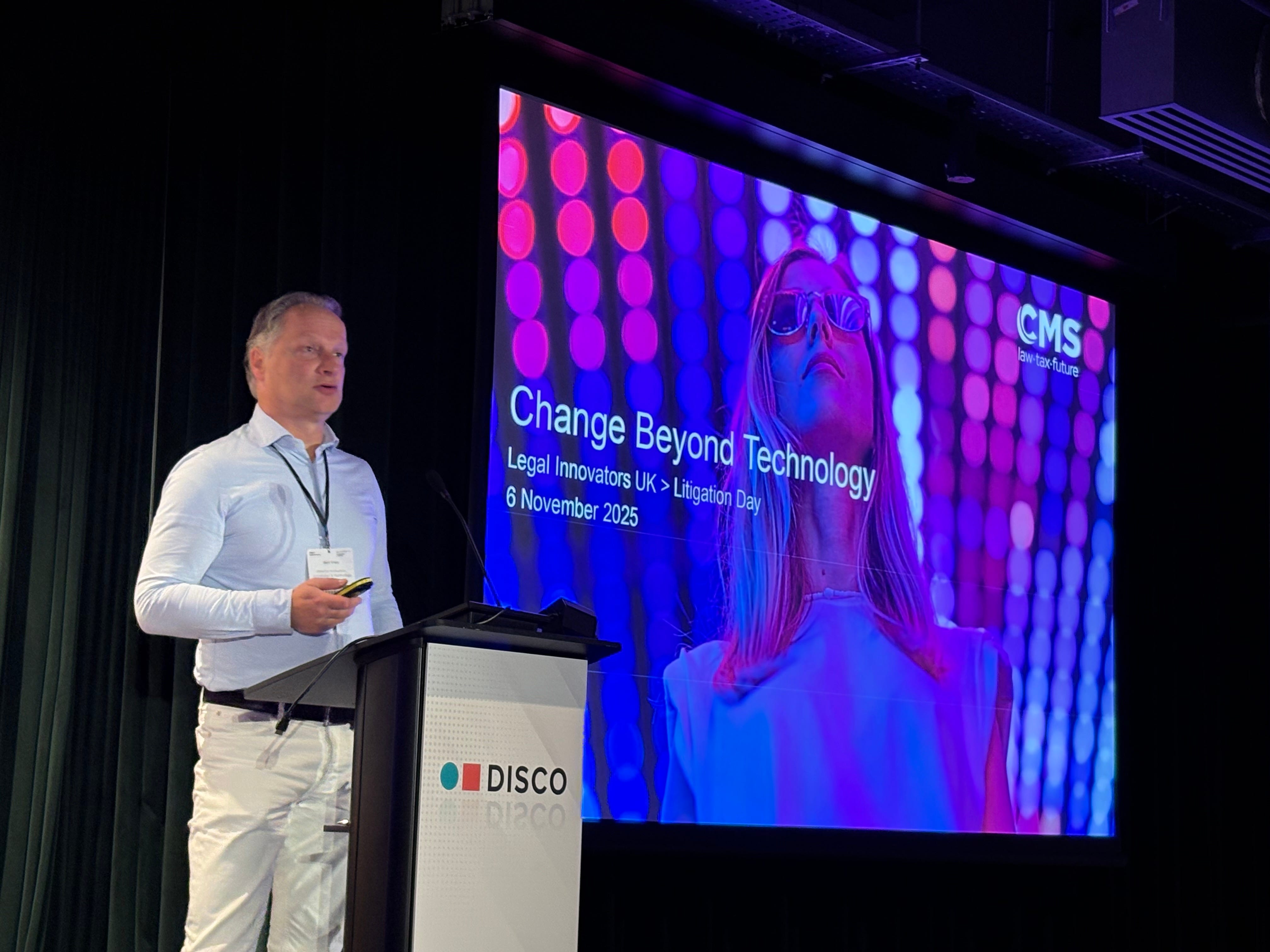
The litigation day brought Bert Vries’s memorable metaphor: lawyers are so busy they don’t have time to upgrade from square wheels to round wheels. And Alan Parfery’s assessment of AI in courtrooms, where fear of miscarriage of justice keeps AI at arm’s length even as it transforms everything outside the courtroom, highlighted a tension that will define the coming years.
Legal Innovators New York: The American Acceleration
If London was measured, New York was electric. Richard Tromans opened with characteristic boldness, declaring we’re living in a moment “as transformational as the drafting of the Constitution.” Hyperbole? Perhaps. But the energy in the room at Latham & Watkins suggested he might be onto something.

Matthew McConnell’s keynote on moving “From Hype to Habit” framed the American approach: heavy investment in people and technology to cultivate change. The session with Jacob Weiner and Michael Pierson of Pierson Ferdinand LLP showcased a new breed of law firm: one that matches top talent but delivers services at 50% below competitors by eliminating junior associates and leveraging AI. It’s a model that would have been impossible two years ago.
Eddie’s observation on the panel hit hard: “It’s not about making easier tasks easier, it’s about making harder tasks more tractable.” This reframing, from efficiency to capability expansion, represents the maturation of American thinking about legal AI. The ability to be “quantitative about contract terms negotiation” (knowing a clause gets pushback 40% of the time) transforms negotiation from art to science.
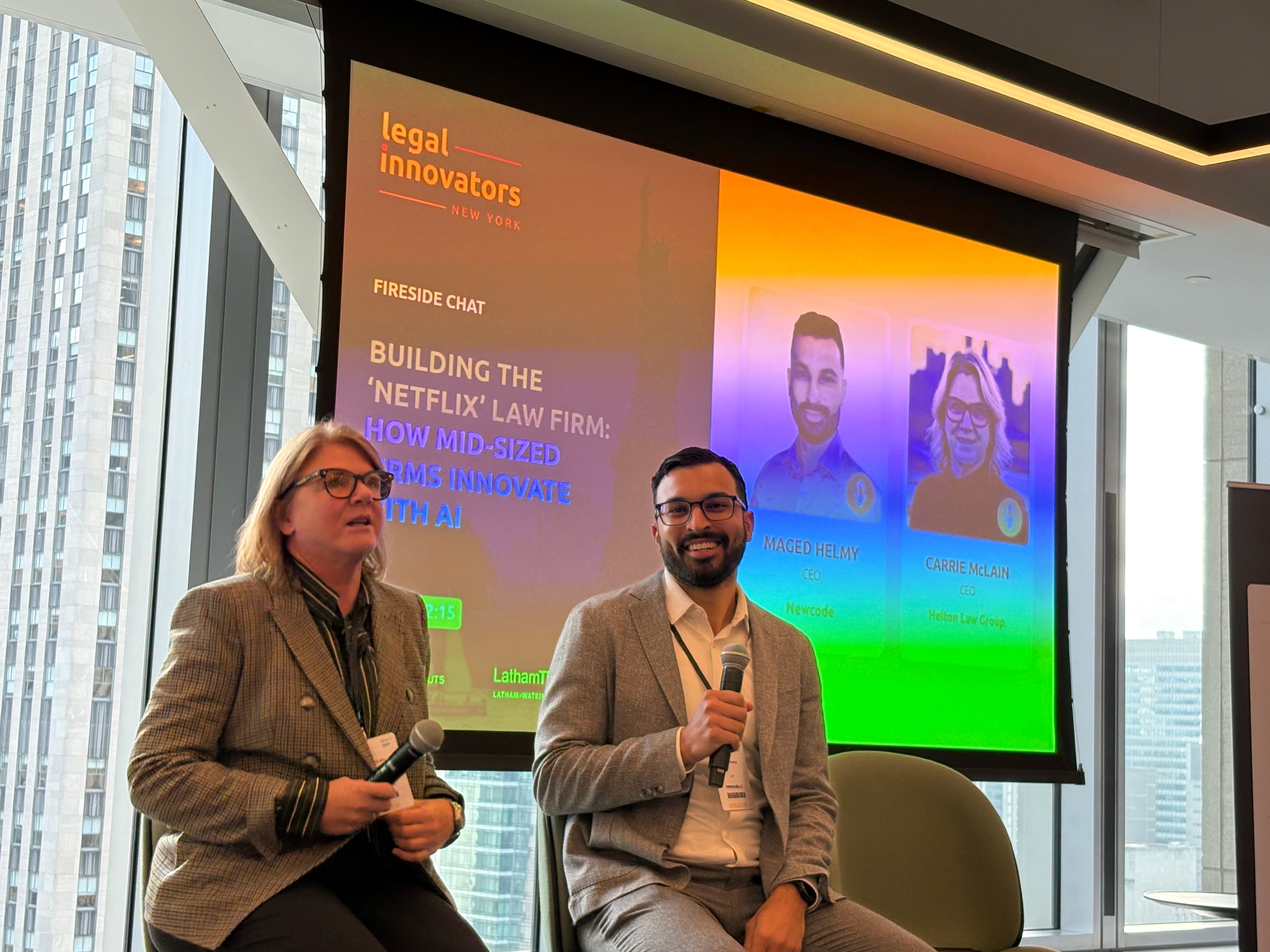
Carrie McLain’s “Netflix versus Blockbuster” analogy captured the entrepreneurial American spirit. Her firm’s 20/80 initiative (flipping from 80% time gathering information to 80% time using it) isn’t incrementalism. It’s revolution. “Lawyers when you need them, data when you don’t” could be a manifesto for the next decade of legal services.
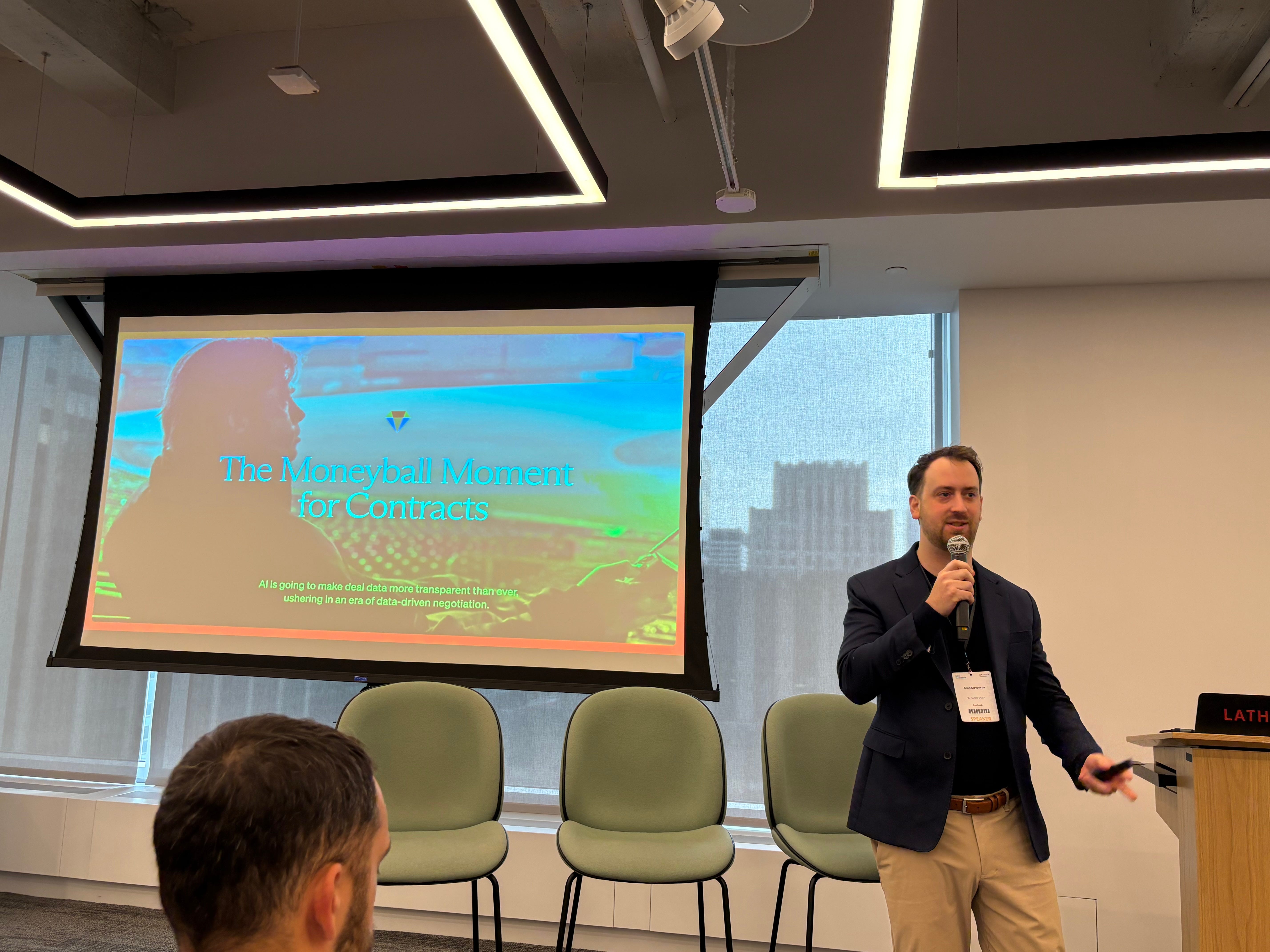
Scott Stevenson of Spellbook delivered a compelling vision of “data-driven contracting” across both London and New York. His critique of training on legal documents (which actually encouraged hallucinations) and advocacy for RAG-based grounding offered technical clarity. The concept of market data grounding, gauging market not by universal averages but by geography, industry, and contract type, addresses one of legal practice’s oldest questions: what is actually “market”?
Michael Rubin’s keynote brought perspective from representing Napster, OpenAI, Harvey, Google, and Microsoft. His observation that we’re moving from large language models to “world models” hints at capabilities yet to come. And his pragmatic assessment, that as we do things faster, there will simply be more work to do, should comfort lawyers worried about obsolescence.
Future Lawyer Canada: The Practical Implementers
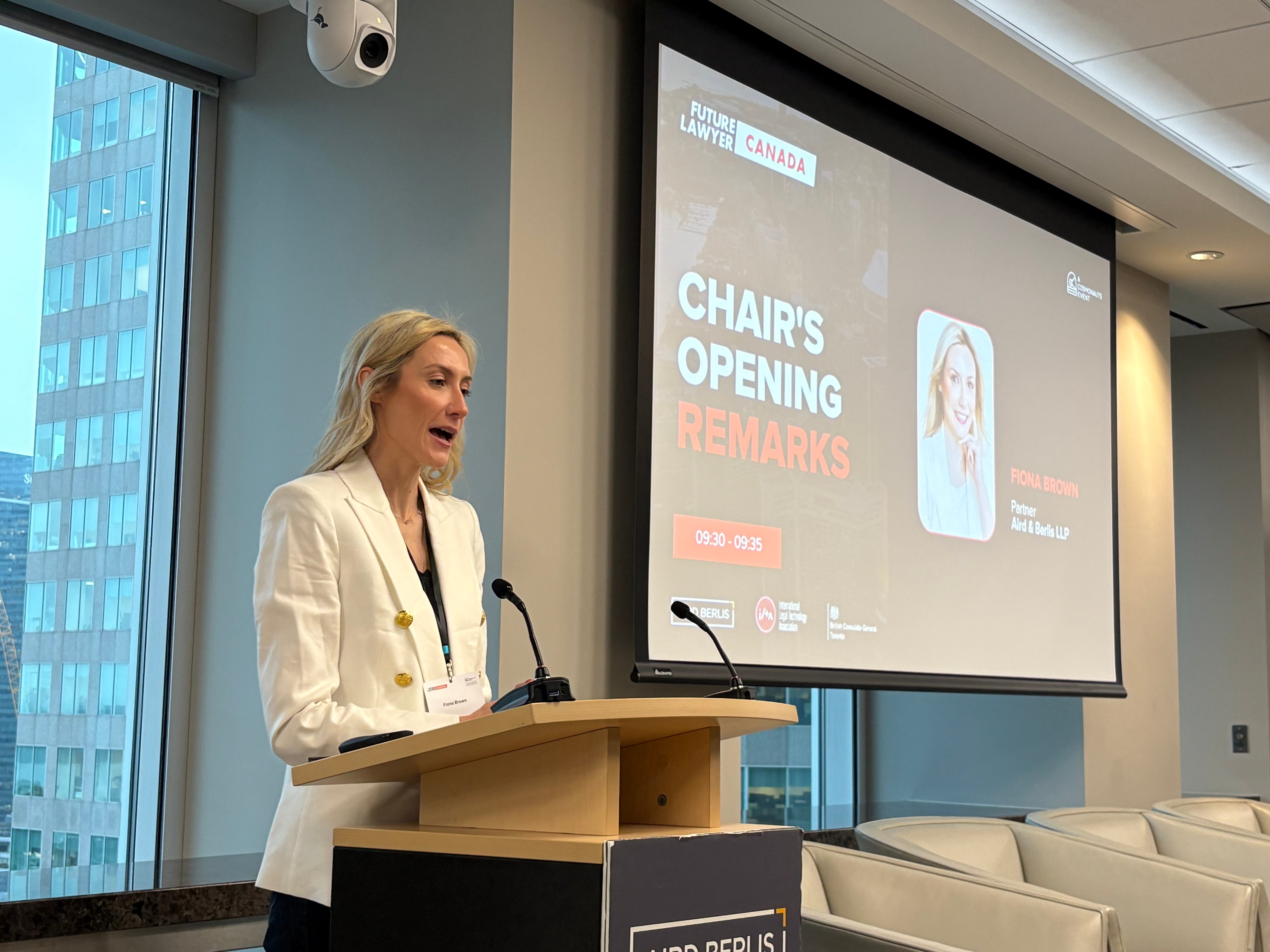
Toronto offered something different: the practical wisdom of a legal market often overlooked in the AI conversation. The inaugural Future Lawyer Canada, masterfully organized by Timo Karakashev, showcased Canadian legal departments doing remarkable work with limited fanfare.
Brian Calalang from Purolator Inc. demonstrated what implementation actually looks like: an AI agent responding to terms and conditions questions across 14,000 employees, saving 100 attorney hours with an average interaction time of just 3 minutes. Farah Ismail of SE Health emphasized the importance of centralized intake systems and branding legal as a partner rather than a bottleneck, ”helping good people do good things.”

The ethics panel featuring Ryan, Brent, and Tiffany tackled questions Americans and Brits often gloss over. Tiffany’s insistence that efficiency savings should pass to clients, and that billing AI training hours to clients is ethically problematic, reflects a Canadian directness about professional responsibility. Brent Arnold’s distinction between deterministic and probabilistic AI (Clippy is okay; ChatGPT requires caution) provided a framework for risk assessment that deserves wider adoption.
Sarah Schultz of Draftwise demonstrated how firm data with proper citations can corroborate what’s market, a theme echoing Spellbook’s approach but grounded in Canadian practice realities.
Perhaps most striking was Tali Green of Goodfact, a self-described “AI skeptic” who argued that consumer-grade AI fails attorneys through unverifiable omissions, questionable provenance, and reliability concerns. Her advocacy for deterministic programming where it makes sense, and AI only where it doesn’t, represents a thoughtful Canadian middle path.
Global Insights: Reading the National Character
What do these three events reveal about AI receptivity by nation?
The UK demonstrates sophisticated skepticism: engaged but measured. The emphasis on integration over adoption, process over tools, and cumulative improvement over breakthrough reflects a legal culture comfortable with evolution rather than revolution. The British trust equation is complex: they’ll embrace AI, but it must earn its place through demonstrated reliability.
The United States shows characteristic ambition and appetite for disruption. The willingness to build entirely new law firm models, the comfort with bold claims and bigger bets, and the cultural permission to fail fast all accelerate adoption. American legal AI is moving at venture capital speed, which brings both innovation and inevitable corrections.
Canada reveals the practical implementer’s mindset, less concerned with hype, more focused on making things work within existing structures. The Canadian emphasis on ethics, security frameworks, and talent development suggests a market that may move more slowly but more sustainably. When Canadians adopt, they tend to stick.
Closing Thoughts
Having spent a decade building AI tools for legal aid organizations, courts, government, lawyers and law firms, and now growing LawDroid to take on America’s access to justice crisis, I’ve watched this technology mature from promising to transformative. What struck me across all three conferences wasn’t the technology itself; it’s remarkable, but we knew that. What struck me was the shift in the conversation.
We’re no longer asking “will AI change legal?” We’re asking “how do we make AI a habit?” We’re not debating whether to adopt; we’re debating how to measure success. The questions have evolved from possibility to implementation, from disruption to integration.
Richard Tromans was right to open New York by comparing this moment to constitutional transformation. Not because AI will replace lawyers, but because it’s rewriting the rules of how legal services can be delivered, priced, and accessed. The opportunity isn’t just efficiency: it’s justice at scale.
Three countries. Three weeks. One profession waking up to its future.
The Constitution was drafted in a Philadelphia summer. The AI constitution of legal practice is being written now, in conference rooms and law offices across three continents. I’m grateful to have witnessed a chapter of it.